
G Magazine Dada Hans Richter: The Berlin Publication, 1923–1926

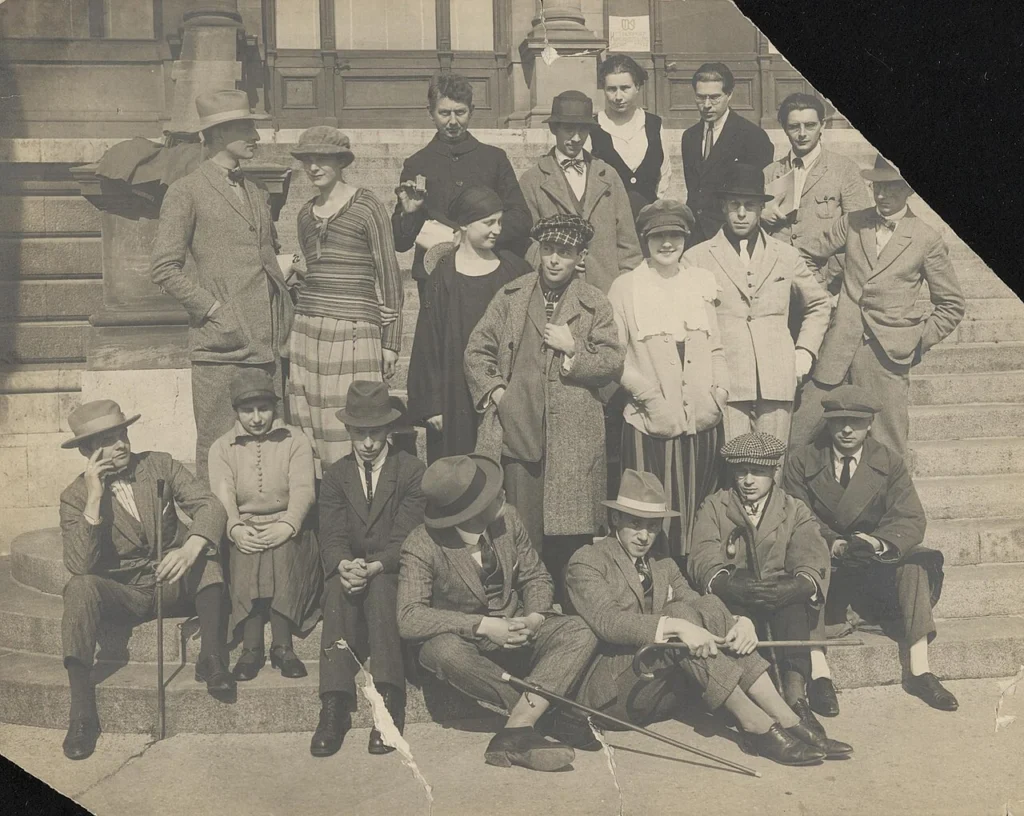
G: Material zur elementaren Gestaltung (1923–1926) was a Berlin magazine edited by Hans Richter, with Werner Graeff and El Lissitzky, that linked Dada graphic experiment and Constructivist design. It was not a Dada organ by program; its five issues preserved a crossover network across Dada, De Stijl, and the Bauhaus.
What was G: Material zur elementaren Gestaltung?
G began as the journal of a group around Hans Richter in Berlin. The subtitle for nos. 1–2 was Material zur elementaren Gestaltung, meaning "material for elemental design." From issue no. 3 it was renamed Zeitschrift für elementare Gestaltung, a journal for elemental design. The term elementare Gestaltung referred to design reduced to basic elements of form, rhythm, and construction, not to Dada spontaneity alone.
The magazine carried typographic experiments, statements on film and architecture, and contributions from artists moving between Dada and Constructivism. Its format made G a record of a transition: artists who had worked with photomontage and provocation were now testing ordered, constructivist composition.
Five issues: dates and subtitle changes
The five-issue run below follows Dawn Ades, "G," in The Dada Reader (2006), p. 306. Ades records the subtitle change and the dates; exact publication months are documented only for no. 1 and no. 4. For the other issues the year is given.
| Issue | Date | Subtitle | Notes |
|---|---|---|---|
| No. 1 | July 1923 | Material zur elementaren Gestaltung | First issue; month documented |
| No. 2 | 1923 | Material zur elementaren Gestaltung | Exact month not documented |
| No. 3 | 1924 | Zeitschrift für elementare Gestaltung | Subtitle change begins here |
| No. 4 | March 1926 | Zeitschrift für elementare Gestaltung | Digitized scan cataloged by Monoskop |
| No. 5/6 | 1926 | Zeitschrift für elementare Gestaltung | Combined final issue |
The change from Material to Zeitschrift is not a typo; it marks the magazine's evolving claim that elemental design could be discussed as its own journal program. Bibliographies may list the early issues under Material zur elementaren Gestaltung and the later ones under Zeitschrift für elementare Gestaltung.
Editors and contributors
Hans Richter edited G magazine with Werner Graeff and El Lissitzky. The masthead later included Ludwig Mies van der Rohe and Frederick Kiesler. These names show the magazine's range: Richter and Graeff came from Berlin Dada and experimental film, Lissitzky from Russian Constructivism, and Mies from architecture.
Contributors included Theo van Doesburg, Raoul Hausmann, Kurt Schwitters, and Ludwig Hilberseimer. That mix connected Dada graphic inventiveness to De Stijl and Bauhaus debates about form. Dawn Ades, in The Dada Reader (2006), calls G a crossover publication rather than the organ of one movement.
Hans Richter is the editor most associated with G magazine, but the masthead was deliberately collective. The inclusion of El Lissitzky and Mies van der Rohe signals that G was not limited to former Dadaists; it was a forum for planar, architectural, and cinematic composition.
Was G a Dada magazine?
G appeared after Berlin Dada's peak, not as its organ. Hans Richter later wrote in Dada: Art and Anti-Art (1965) that the magazine's direction was constructive rather than a continuation of Dada provocation. The subtitle change from Material to Zeitschrift für elementare Gestaltung signals that turn: the editorial language moved toward ordered form, film, and architecture.
Raoul Hausmann and Kurt Schwitters contributed from Dada circles, but G also published material that belonged to Constructivism and De Stijl. Magazines such as 291, Contimporanul, and Dada moved in different circuits; G's Berlin group met architecture and film on purpose. That is why it is more accurate to call G a crossover or transitional publication than a Dada magazine. G belongs to a wider set of Dada and modernist magazines. For other periodicals of the movement covered on this site, see SIC: The Paris Review That Paved the Way for Dada and Dada Almanach 1920: Richard Huelsenbeck's Anthology.
Richter's account separates the constructive phase from the earlier Cabaret Voltaire and Dada manifesto years. The magazine's later issues also engaged film, architecture, and design alongside graphic experiment.
How to see G today: facsimiles and sources
For a facsimile, Dawn Ades's entry in The Dada Reader (2006), p. 306, points to the Monoskop catalog of G no. 4 (March 1926). The March 1926 issue is the one with a documented month. Research libraries such as the International Dada Archive at the University of Iowa Libraries hold original issues.
The standard reference is Dawn Ades, "G," in The Dada Reader: A Critical Anthology (Tate Publishing, 2006), p. 306. The scan shows the layout that textual references often summarize. For researchers, the International Dada Archive provides a stable institutional location for the original run.
FAQ
Who edited G magazine?
Hans Richter edited the magazine with Werner Graeff and El Lissitzky. Mies van der Rohe and Frederick Kiesler also appeared on the masthead.
Was G a Dada magazine?
Not strictly. It signaled a Constructivist and elemental design turn after Berlin Dada, although several Dada artists contributed.
How many issues of G were published?
Five issues appeared from 1923 to 1926. The subtitle changed after issue two, from Material to Zeitschrift für elementare Gestaltung.
Where can I find G magazine facsimiles?
Monoskop hosts at least the March 1926 issue. Originals are in research collections such as the International Dada Archive at the University of Iowa Libraries.
Sources
- Dawn Ades, "G," in The Dada Reader: A Critical Anthology, Tate Publishing, London, 2006, p. 306.
- Hans Richter, Dada: Art and Anti-Art, 1965.
- Monoskop, G no. 4 (March 1926), digitized scan.
- International Dada Archive, University of Iowa Libraries.
Keep reading