
Francis Picabia's Manifeste Cannibale Dada (1920)

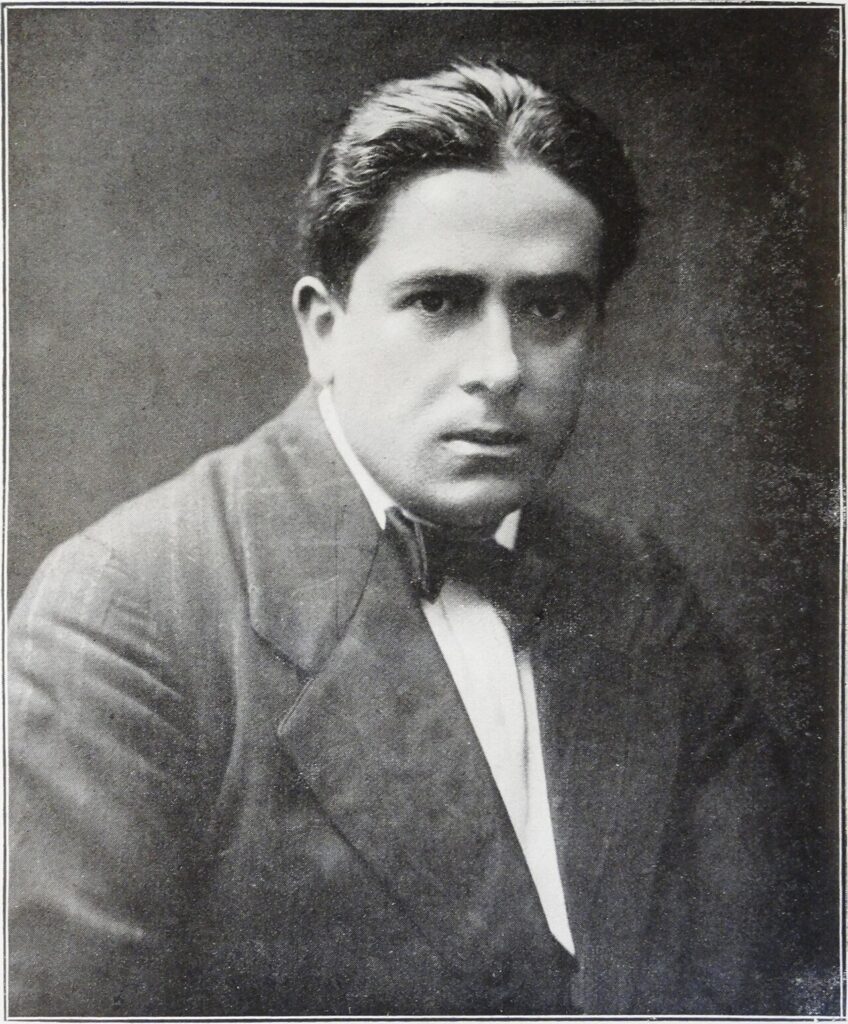
Guillaume Apollinaire, Public domain, Wikimedia Commons
The Manifeste Cannibale Dada is a short 1920 text by Francis Picabia, published in his magazine 391 and in the Paris journal DADAphone no. 7. It uses "cannibalism" as a Dada image for how movements absorb and discard ideas, preferring contradiction to a fixed program. The text is dated 27 March 1920.
What the Manifeste Cannibale Dada Is
Manifeste Cannibale Dada is a short manifesto-style statement by Francis Picabia, a central figure in Dada and anti-art. The original French title, "Manifeste Cannibale Dada," announces the image at the center of the piece. The text is dated 27 March 1920. It appeared at a moment when Paris Dada brought together Picabia and Tristan Tzara after the first Dada activities at the Cabaret Voltaire in Zurich. The piece belongs to Picabia's verbal provocations rather than to a long theoretical essay. It presents the movement through the figure of cannibalism, treating earlier avant-garde styles as material to be absorbed and remade. Unlike a traditional artist's statement, it does not list aims or methods; it works by image and opposition, two devices Picabia used throughout the Dada years.
Where It Appeared: 391 and DADAphone No. 7
The manifesto appeared in two Paris outlets in 1920. Picabia published it in 391, the magazine he edited and used as a vehicle for Dada statements. The text also appeared in DADAphone no. 7, a journal issued by Au Sans Pareil in Paris in March 1920. The publication record in DADAphone no. 7 gives the date 27 March 1920. The International Dada Archive at the University of Iowa records Picabia's journals and facsimile copies. Since 391 was Picabia's own review, the manifesto reached readers directly from the artist's editorial circle. The dual publication shows how closely Picabia's review and the Paris Dada journal network overlapped in early 1920. The date in the journal's publication line places the text in the first months of Paris Dada.
What Picabia's Text Says
The published manifesto works by image and opposition rather than by argument. Four short passages show the method. The title phrase "Manifeste Cannibale Dada" combines a declaration of intent with the figure of consumption. In the text, Picabia writes "Dada dévore tout," which translates as "Dada devours everything," making the movement an act of taking in and transforming. The line "ce qui ne nous convient pas, nous le mangeons" reads in English as "what does not suit us, we eat," using the bodily image to refuse what a movement does not need. Another passage states "nous ne sommes pas des littérateurs," or "we are not men of letters," a rejection of the literary role in favor of direct action. The final line of the manifesto, "le dadaïsme est l'art de se contredire," translates as "Dadaism is the art of contradicting oneself," closing the text on contradiction as Dada's only fixed point. None of these passages proposes a program. Each treats style and influence as material to be consumed and discarded.
Cannibalism in Picabia's Dada Poetry, 1917–1924
For archival context, the Bibliothèque Kandinsky at the Centre Pompidou holds documentation on Picabia's Dada years. The chronology below lists the publication landmarks that frame this manifesto.
| Year | Event |
|---|---|
| 1917 | Picabia launches 391 in Barcelona, and the magazine becomes a forum for Dada statements. |
| 1920 | In Paris, Picabia publishes the Manifeste Cannibale Dada in 391 and in DADAphone no. 7. |
| 1924 | Picabia publishes L'athlète des pompes funèbres, continuing his mix of visual art and text. |
These dates place the manifesto between the early years of 391 and Picabia's later Paris publications. The 1920 text marks a moment when Picabia was moving between magazine statements and book-length output. Cannibalism in the title is an anti-art strategy that treats earlier movements as material rather than as authorities.
Where to Consult the Original
Original issues are held in library and archive collections. The International Dada Archive at the University of Iowa records Picabia's journal and facsimile copies for research use. DADAphone no. 7, published by Au Sans Pareil in Paris in 1920, is the print source for the manifesto. Researchers should consult institutional catalogs for current access options.
For more on the editorial voice behind this page, see the editors of Dada Companion.
FAQ
What is Francis Picabia's Manifeste Cannibale Dada?
A short 1920 Dada text by Picabia that defines the movement through the figure of consuming and discarding influences.
Where was Picabia's Manifeste Cannibale published?
In Picabia's magazine 391 and in DADAphone no. 7, both in Paris in 1920.
Is there an English translation of the Manifeste Cannibale?
English translations appear in some scholarly Dada readers; the original French text in DADAphone no. 7 remains the point of reference.
How does the manifesto relate to Picabia's Dada poetry?
It grows out of the verbal-visual games of 391 and rejects fixed meaning in favor of contradiction.
What does "cannibale" mean in the title?
A Dada figure for absorbing earlier avant-garde styles and recombining them.
Sources
- DADAphone no. 7 (Paris: Au Sans Pareil, March 1920). The four passages quoted in "What Picabia's Text Says" require verification against the original print before publication.
- International Dada Archive, University of Iowa.
- Centre Pompidou, Bibliothèque Kandinsky.
Keep reading